





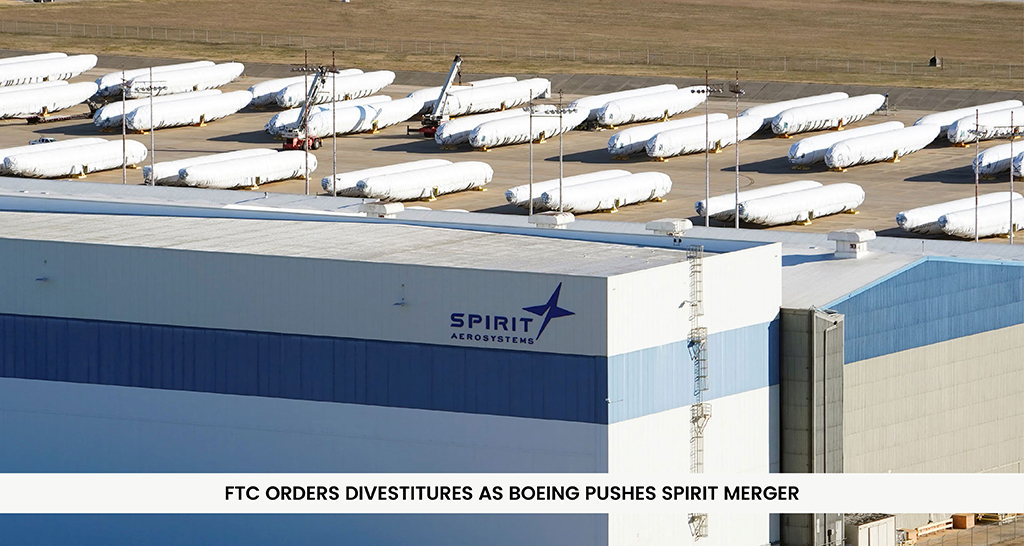
Boeing has announced its goal to finalize its long-anticipated merger with Spirit AeroSystems by the end of this year. This comes after U.S. regulators gave conditional approval, along with a requirement for several significant divestitures to ensure competition remains strong in the aerospace sector. This decision is a significant milestone for Boeing as it seeks to regain direct control over essential aircraft components and stabilize its supply chain, which has faced numerous disruptions in recent years.
The Federal Trade Commission (FTC) approved the deal, but with a catch: Boeing must divest several Spirit AeroSystems facilities that currently provide key aerostructures to Airbus and other manufacturers. Regulators expressed concerns that if Boeing kept those assets, it would have too much power over the parts used by its main competitor, which could skew pricing, access, and long-term competitiveness in the global commercial aviation market.
According to the FTC’s guidelines, several Spirit operations that are responsible for making wings, fuselage sections, and other components for Airbus planes need to be sold off to an independent buyer. Additionally, Boeing has to offer transitional support to make sure Airbus continues to receive a steady supply during the transfer of these facilities. The agency will keep a close eye on the whole process, implementing oversight measures to guarantee that Boeing adheres to the divestiture order completely.
For Boeing, acquiring Spirit is a major strategic shift. Spirit AeroSystems used to be part of Boeing before it was spun off nearly twenty years ago. Since that time, Spirit has been a vital supplier for Boeing’s key commercial programs, especially the 737, 787, and 777X. Interestingly, Spirit has also become an essential supplier for Airbus jets, which creates a unique scenario where two of the biggest aircraft manufacturers depend on the same facilities for their major structures.
Boeing believes that bringing Spirit back under its wing will lead to more stable production, better safety and quality oversight, and fewer delays that have plagued aircraft deliveries in recent years. The company has been dealing with ongoing supply-chain issues and quality concerns that have impacted its output and financial health. By reintegrating Spirit, Boeing aims to streamline its operations, cut down on fragmentation, and gain tighter control over its manufacturing processes.
Spirit AeroSystems shareholders gave the green light to the merger earlier this year, and now both companies are gearing up for regulatory reviews and some operational tweaks. The necessary divestitures are set to significantly change the deal’s structure, but they will not affect Boeing’s timeline for wrapping up the merger. The company is optimistic that all the required steps can be completed by the end of the year.
The market’s reaction to the announcement was a bit of a mixed bag. Spirit’s shares saw a boost as investors felt optimistic that the merger would solidify its financial position. On the other hand, Boeing’s stock took a slight hit, likely due to the uncertainty surrounding the divestiture process and the extra compliance requirements that regulators are imposing.